Armadillo Removal in Huntsville
Armadillo Removal in Huntsville, AL
Armadillo removal help for lawn digging, burrows near slabs, landscaping damage, and repeated nighttime activity. Call with the address, active area, signs, and whether the animal is inside the structure.
- Common areas
- lawns, landscape beds
- City signal
- April-November
- Quote
- Phone
- Next step
- Removal plan
For armadillo problems in Huntsville, start by describing the location, how often it happens, and whether you have seen damage, droppings, odor, or a clear entry point.
Local conditions matter. Huntsville has homes, yards, sheds, and roofline gaps that can create recurring wildlife activity, and seasonal activity often follows April-November activity around nesting, denning, and food sources.
Common signs
- Cone-shaped holes in turf
- Burrow under slab or porch
- Nighttime digging across beds
Tell the provider
Species clues, active area, access details, pets in the home, urgency, and whether young animals may be present.
Huntsville (North Alabama) armadillo quote prep
A Huntsville armadillo problem is really a digging problem — and they don’t come to bait easily
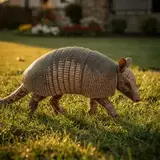
Nine-banded armadillos have spread across most of Alabama, now including the Huntsville area, and the damage shows up as rooting and burrowing for grubs in lawns, flower beds, and along foundations. They are mainly nocturnal, which is why most people see the holes before the animal. Because armadillos don’t reliably take bait, tell the provider where the digging and any burrows are so a trap can be set along the travel path.
Point to the damage: the Alabama Cooperative Extension System notes conflicts come from the animal digging and rooting for insect larvae and grubs in rich soil — lawns, flower beds, gardens — so mark the freshest holes, any burrow openings under a deck, slab, or foundation, and whether the lawn is being flipped overnight.
Set expectations on trapping: armadillos are mainly nocturnal and don’t reliably go to bait, so Extension guidance is that live traps work best when “wings” or barriers are added to funnel the animal into the trap along its route or at a burrow — a bare baited trap in the open often fails, which is why a provider wants to see the travel path.
Plan for prevention, not just one catch: since they root for grubs and dig burrows, ask the provider how they will discourage return activity — barriers at the vulnerable beds and burrow areas and reducing the grubs that draw them — rather than only removing the current animal.
Keep handling safe: the CDC reports that some armadillos in the southern United States naturally carry the bacteria that cause leprosy (Hansen’s disease), and the nine-banded armadillo is the only known animal reservoir in North America — the risk is low, but it is a clear reason not to handle a trapped or dead armadillo bare-handed and to leave removal and disposal to the provider.
Local diagnostic checklist
What changes armadillo removal quotes in Huntsville
Entry areas to check
- Lawns and landscape beds
- Slab edges and porches
- Moist soil areas with insects
Plan questions
- Map where digging is active
- Discuss trapping and legal options for the area
- Repair turf and reduce attractants after removal
Pricing factors
- Extent of lawn damage
- Burrow location
- Follow-up prevention and repair needs
Removal and exclusion
Questions for armadillo quotes in Huntsville
Method
Ask what approach is legal and practical for armadillo activity in your area.
Access
Confirm whether roof, attic, crawl-space, deck, shed, or yard access changes the visit.
Prevention
Ask whether sealing, guards, cleanup, or follow-up inspection is included or separate.
More local help
Other wildlife removal pages in Huntsville
Raccoon Removal
Help for raccoons in attics, chimneys, crawl spaces, sheds, and trash areas, with inspection, removal, and entry-point guidance.
Squirrel Removal
Squirrel removal help for attic noise, chewed fascia, roof returns, vents, wall voids, and recurring daytime activity.
Bat Removal
Bat exclusion help for colonies in attics, vents, shutters, gable gaps, and wall spaces, with timing and cleanup questions handled by local providers.
Bird Removal
Bird removal and exclusion help for nests in dryer vents, bathroom vents, gutters, signs, warehouse ledges, porch areas, solar panels, nuisance nesting spots, and access-sensitive buildings.
Get armadillo removal help in Huntsville
Call now and describe the animal, where it is active, and what you are hearing or seeing. A local provider can confirm availability and next steps.